
The automatic vs quartz watch question comes up for almost every first-time buyer. Both can look identical from the outside, yet they work in completely different ways inside. One runs on a tiny battery and a vibrating crystal, the other on springs, gears and the motion of your wrist. This guide explains the real differences in simple terms so you can choose with confidence, then points you to examples in our watch shop.
How a quartz watch works
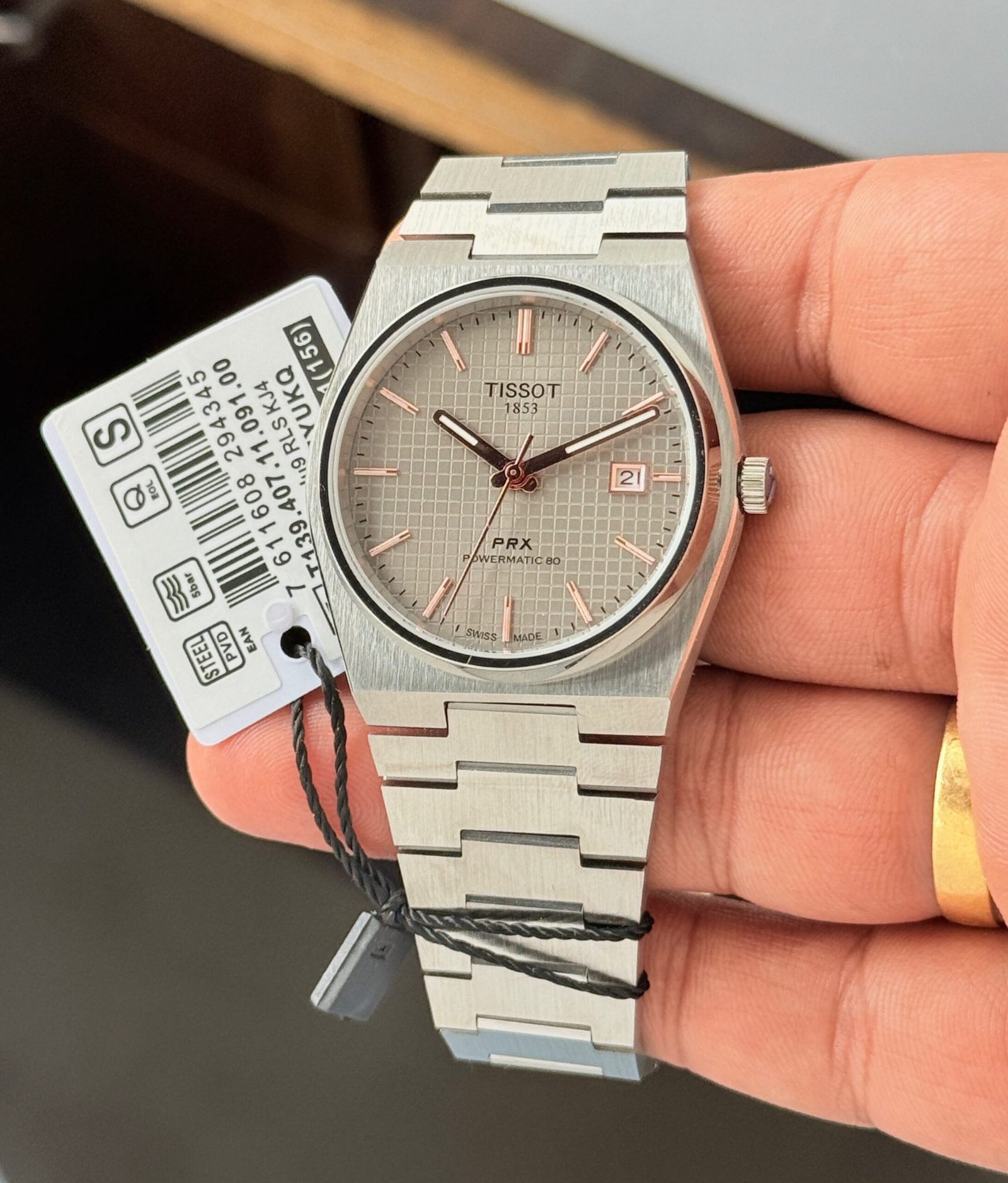
Table of contents
A quartz watch uses a battery to send a small electric current through a quartz crystal. The crystal vibrates at a very steady rate, and a circuit counts those vibrations to drive the hands forward once every second. That is why most quartz seconds hands move in small ticks. The technology became mainstream in the 1970s and is explained well on Wikipedia's quartz clock page.
What quartz does well
- Very good timekeeping with almost no effort from you.
- Keeps running when you leave it on a shelf for weeks.
- Usually slimmer and lighter, which feels nice in hot weather.
- Low maintenance: mostly a battery change every few years.
How an automatic watch works
An automatic watch is a mechanical watch that winds itself. A weighted rotor spins as you move your arm and winds the mainspring. The spring slowly releases energy through a set of gears and a balance wheel that swings back and forth many times a second. The seconds hand glides in a smooth sweep instead of ticking. You can read more on how automatic watches work.
What automatic does well
- No battery to replace, ever.
- The smooth sweep and visible movement (on skeleton or display back models) feel special.
- A sense of craft that many watch lovers enjoy.
Automatic vs quartz watch: accuracy
Accuracy is where quartz clearly wins. A typical quartz watch drifts by only a few seconds per month. A mechanical watch is normally measured in seconds per day, and even the strict chronometer standard allows a small daily variation. A mechanical watch is also affected by temperature, position and how fully it is wound.
In daily life this means you may need to correct an automatic watch now and then, while a quartz watch can go months without adjustment. For most people neither is a problem, but if you hate resetting the time, quartz is the easier companion.
Care, servicing and daily use
A quartz watch needs a new battery every few years. Replace it promptly, because an old battery can leak and damage the movement. Have the seals checked at the same time if you wear it near water.
An automatic watch needs to be worn to keep running. Most will stop after a day or two off the wrist. You can wind it by turning the crown gently or simply wear it and let it wind itself. Mechanical movements also benefit from periodic servicing by a watchmaker. Keep both types away from strong magnets such as speakers and some phone cases.
For practical tips on humidity, sweat and the monsoon, see our watch care tips guide.
Weight, thickness and comfort
Automatic movements have more parts, so automatic watches are often a little thicker and heavier than similar quartz models. Some people love the solid feel, others prefer a light watch during a hot Indian summer. If you have a slim wrist, pay attention to case thickness as well as diameter. Our guide on choosing the right watch size helps here.
Automatic vs quartz watch in Indian weather
Heat and humidity affect both types, but in different ways. Quartz batteries and electronics do not like extreme heat, so avoid leaving any watch on a car dashboard in summer. Mechanical movements rely on fine oils that can thicken or thin with temperature, which can change accuracy a little across the seasons.
In the monsoon, the seals matter more than the movement. Whichever side of the automatic vs quartz watch choice you land on, keep the crown pushed in, dry the watch after rain and pick a steel or rubber strap over leather during wet months.
Cost and long term value
Quartz movements are simpler to produce, so a quartz watch usually costs less than a comparable automatic one. Over the years, a quartz watch costs you a battery every so often, while an automatic watch costs you an occasional service. When weighing an automatic vs quartz watch, think about which kind of upkeep you are happier with, not just the price on day one.
Many people end up owning both: a quartz watch for busy days and an automatic for weekends and special occasions.
Which one should you buy?
Choose quartz if you want
- A grab-and-go watch that is always on time.
- A lighter, slimmer watch.
- Busy dials like chronographs at a friendly price. Browse the Tissot Chronograph Watch or the Michael Kors Quartz Watch for women.
Choose automatic if you want
- No batteries and a smooth sweeping seconds hand.
- A watch you wear daily and enjoy as a small machine.
- A dial that shows the movement. Compare the Tissot Automatic Watch, the Citizen Automatic Watch and the Rado Automatic Watch.
Want something in between? Skeleton and open heart designs, such as the Seiko Open Heart Watch, let you see the movement at work. Always check the movement listed on each product page, because skeleton style does not always mean automatic.
Automatic vs quartz watch: quick summary
| Factor | Quartz | Automatic |
|---|---|---|
| Power | Battery | Mainspring wound by wrist motion |
| Accuracy | Seconds per month | Seconds per day |
| Seconds hand | Ticks | Smooth sweep |
| Stops if unworn? | No | Usually after a day or two |
| Upkeep | Battery change every few years | Regular wear and periodic servicing |
| Feel | Lighter and slimmer | Often thicker and heavier |
There is no wrong answer in the automatic vs quartz watch debate. Pick the one that matches how you live. If you are still deciding, browse our men's watches, women's watches and luxury collection, all with free delivery and Cash on Delivery across India.
Frequently asked questions
Is an automatic watch more accurate than a quartz watch?
No. Quartz watches are generally much more accurate. A quartz watch usually drifts by seconds per month, while a mechanical automatic watch is measured in seconds per day.
Does an automatic watch need a battery?
No. An automatic watch is powered by a mainspring that winds as you move your wrist. It needs no battery, but it will stop if not worn or wound for a day or two.
How often does a quartz watch need a new battery?
It depends on the movement and features, but a battery change every few years is typical. Replace a dead battery promptly to avoid leaks inside the case.
How can I tell if a watch is automatic or quartz?
Look at the seconds hand. A quartz seconds hand usually ticks once per second, while an automatic seconds hand moves in a smooth sweep. The product page also lists the movement.
Which is better for daily office wear in India?
Both work well. Quartz is lighter and needs no daily wear, which suits people who rotate watches. Automatic suits people who wear one watch every day and enjoy mechanical watches.
Leave a Reply